Learn How Your Brain Works
Explore Yourself
Online Autism Test for Adults: Measure Your AQ Quotient
 Accessible Autism Testing: A Guide to Confident Next Steps
New Updates

Adult Autism Screening and Self-Assessment: A Comprehensive, Reader‑First Guide
Why Self-Assessment Matters in Adulthood
Many adults arrive at neurodivergence through winding paths: workplace burnout that never quite resolves, re...

Free Autism Screening: Clarity, Confidence, and Next Steps
Understanding Free Screening and Why It Matters
Finding reliable information about autistic traits can feel overwhelming, especially when you are jus...

Online Autism Screening for Adults: A Comprehensive Guide
What Online Autism Screeners Are and How They Help
Many adults reach a point where long-standing quirks, communication shifts, or sensory patterns in...
Take Autism Test Online
Get StartedUnderstand Your Traits With a RAADS Autism Test
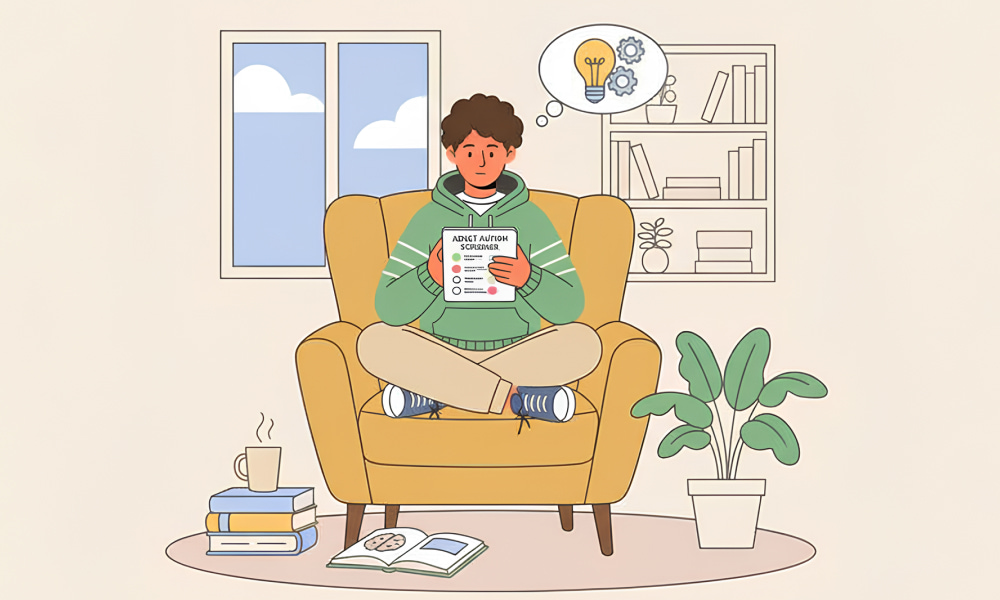
People often begin exploring neurodiversity after noticing patterns in communication, sensory processing, or routines that have persisted since childhood. An approachable pathway into this exploration is learning how screening questionnaires and structured checklists work, and how they differ from a clinical evaluation. While a formal diagnosis requires trained professionals, self‑guided tools can illuminate tendencies, help you track everyday experiences, and prepare you for a conversation with a clinician. The goal is not to label yourself quickly, but to collect meaningful observations that point you toward informed next steps. With that mindset, you can reduce uncertainty and build confidence as you learn.
For many readers who want a gentle starting point, an autism test often serves as a structured way to reflect on social preferences, sensory profiles, and cognitive styles without pressure. These instruments translate lived experiences into consistent questions, which makes it easier to notice trends over time. By pairing your answers with examples from daily life, you’ll gain a clearer picture of how traits manifest across settings like work, school, and home. Context matters, so consider reading results alongside personal journals, feedback from trusted people, and notes about energy levels.
Accessibility also counts when you’re deciding where to begin, and some platforms provide an autism test free of charge so you can explore without financial stress. Free tools are useful for orientation, especially if you’re building familiarity with terminology and typical item formats. Keep in mind that costs can vary by site, and that price alone does not determine quality; instead, look for clear scoring explanations and references to research. If you appreciate a playful interface, you may enjoy an autism test quiz presentation that softens the experience while preserving meaningful substance.
- Use screening results as conversation starters, not final conclusions.
- Track examples from work, relationships, and sensory environments.
- Compare responses over time to spot stable patterns versus temporary stressors.
- Bring notes to appointments so professionals can evaluate a fuller picture.
How Self‑Assessments Work, What They Measure, and Where They Fit
Questionnaires typically group items into clusters such as social communication, restricted interests, sensory sensitivities, and flexibility. Behind each item sits a body of research connecting everyday behaviors to recognized diagnostic domains. When you respond consistently across clusters, your overall profile begins to emerge, highlighting areas that align with autistic traits and areas that do not. Because life context is complex, trustworthy tools explain scoring ranges, provide nuance about interpretation, and encourage clinical follow‑up when indicated.
Many newcomers arrive with a search phrase like a do I have autism test, yet robust screening is less about yes-or-no answers and more about pattern recognition across situations. The most helpful approach treats each score as a data point among many, including developmental history, school reports, and observations from people who know you well. Consider how stress, burnout, masking, and co‑occurring conditions might influence responses on any given day, then revisit the questionnaire later to see whether results are stable.
Clinicians do not rely on a single tool marketed as the most accurate autism test, because best practice aggregates information from multiple sources. That includes structured interviews, observation scales, and cognitive or language testing when relevant to the referral question. Within pediatric care, the M-CHAT autism test helps identify toddlers who may benefit from a fuller assessment, especially when paired with caregiver narratives and developmental milestones. For adolescents and adults, screeners tend to include richer context about camouflaging, sensory profiles, and longstanding interests.
- Expect questions that reference real‑world scenarios rather than abstract traits.
- Look for clear guidance on score thresholds and suggested next steps.
- Repeat a measure after rest if fatigue or anxiety may have skewed responses.
- Share results with a clinician who can interpret them within your history.
Comparing Popular Self‑Assessment Tools and What Each Offers
Different platforms package similar constructs with varying depth, tone, and explanation style. Some questionnaires are concise and friendly for mobile use, while others are comprehensive and best completed when you can focus without interruptions. Consider the length you can manage comfortably, the clarity of item wording, and whether the site provides interpretation notes tied to peer‑reviewed research. Transparency about scoring and source materials is a strong indicator of quality.
Adults who are reflecting on a lifetime of traits often examine the RAADS autism test because it blends current tendencies with developmental history. Readers who want approachable language and supportive articles may find value in the embrace autism test offerings that link scores to clear explanations. If you prefer a straightforward interface with crisp item phrasing, an IDRlabs autism test can be a quick way to gather a preliminary snapshot. In the UK, many people encounter the clinical partners autism test that summarizes responses and suggests avenues for professional discussion.
| Tool or Platform | Primary Age Focus | Typical Time |
| Comprehensive adult self‑report | Late teens to adults | 15–30 minutes |
| Pediatric caregiver checklist | Toddlers and preschoolers | 5–10 minutes |
| Concise online screener | Teens and adults | 5–12 minutes |
Rather than chasing a single perfect instrument, think in terms of complementarity: a brief screener to orient yourself, a longer inventory to deepen detail, and professional input to knit everything together. Pay attention to how consistently you endorse items across different tools, because stable patterns strengthen the case for further evaluation. If a questionnaire feels vague or confusing, try one with more examples or different wording, then compare your comfort level and clarity between them. Small adjustments in language can make a significant difference in how well an item maps to your lived experience.
- Choose a length that fits your attention span to avoid rushed responses.
- Favor platforms that describe limitations and recommend clinical follow‑up.
- Save or print results so you can review them over time with context.
- Revisit tools after major life changes to see how stressors influence patterns.
Benefits, Caveats, and Ethical Use of Self‑Guided Screeners
Self‑assessments can demystify terminology, help you articulate needs, and provide language for advocating for accommodations. They invite reflection on routines, communication preferences, and sensory environments, which can directly inform practical adjustments at work or home. When used thoughtfully, results become a springboard for constructive conversations with health professionals, educators, managers, and loved ones. The key is to hold results lightly while still treating them as useful information.
Many readers who have navigated school and work for years will appreciate that an autism test for adults focuses on lifelong patterns rather than isolated moments. These instruments often include items about masking, burnout, and the social energy cost of everyday interactions. Because neurodiversity intersects with anxiety, ADHD, or learning differences, careful interpretation guards against over‑attributing challenges to a single cause. A balanced perspective helps you turn data into supportive action rather than worry. For those balancing busy schedules, an online autism test adults can be convenient, though convenience should not replace clinical care when concerns are significant. Treat cutoffs as indicators that merit a deeper look, not verdicts about identity or future potential. If a result is surprising, pause and revisit when you’re rested, then compare responses across tools to see whether themes persist. Remember that lived experience, strengths, and goals matter as much as any score.

- Use results to request sensory or communication adjustments that improve daily life.
- Avoid self‑diagnosis when safety, mental health, or complex history is involved.
- Seek culturally informed clinicians who understand masking and late identification.
- Reframe scores as insights for growth, not as limits on your capabilities.
Preparing for a Questionnaire and Planning Next Steps
Before you begin, set aside quiet time, reduce notifications, and gather notes about childhood traits and recent challenges. If possible, ask a trusted person who knows you well to share observations, because outside perspectives can reveal patterns you might miss. Read item wording carefully, answer based on typical behavior rather than rare exceptions, and take short breaks if attention starts to drift. Honest, unhurried responses produce the most meaningful profile.
When you see a link to an autism test online free, check whether the site explains scoring logic and offers guidance about interpretation. Clear language about limitations, suggestions for professional follow‑up, and links to credible resources signal a more responsible approach. If results indicate elevated traits, consider scheduling a consultation to discuss whether a formal evaluation would be helpful. Bring printed answers, real‑world examples, and specific goals to make the appointment productive.
If you need a no‑cost starting point, a free autism test can help you explore themes before investing time in a full evaluation. After you’ve gathered initial data, prioritize sleep, stress management, and sensory supports while you wait for appointments, as these changes can improve daily functioning regardless of diagnosis. Keep a brief log of situations that felt easier or harder, because such notes help clinicians connect questionnaire scores to practical recommendations. With preparation, you’ll turn a short screener into a thoughtful roadmap.
- Plan to revisit the same tool in a few weeks to confirm stability.
- Pair results with concrete workplace or school examples.
- Request summaries from clinicians so you can reference them later.
- Use community forums carefully, favoring moderated, evidence‑aware spaces.
Take Autism Test Online
Get StartedFrequently Asked Questions
-
Can a web questionnaire diagnose autism by itself?
No, only qualified professionals can make a diagnosis, and they use multiple data sources such as interviews, observations, and history. Online tools are best viewed as signposts that highlight trends worth discussing with a clinician. Treat them as informative, not definitive.
-
How should I interpret my score from a self‑assessment?
Use score ranges as indicators that suggest where traits may concentrate, then compare your answers with real‑world examples. If results point toward elevated patterns, consider sharing them with a healthcare provider who can evaluate context and rule out other explanations. Repeating the same tool after rest can help confirm whether patterns are stable.
-
Are shorter screeners less useful than long inventories?
Both have value, because brief tools can surface themes quickly while longer formats provide nuance and better coverage of varied domains. Choose the length you can complete carefully, and supplement concise measures with more detailed questionnaires when time allows. Some readers specifically look for an autism test 50 questions format to balance depth with manageable effort.
-
What if my results differ across two platforms?
Variation can arise from wording differences, temporary stress, or the context in which you answered items. Compare item examples, retake them when you’re rested, and prioritize tools that publish clear interpretation notes. When in doubt, bring both results to a clinician who can integrate them with your history.
-
How do I discuss screening outcomes with family or at work?
Lead with practicality by linking traits to specific needs such as sensory breaks or written instructions. Share a concise summary of your main patterns and explain what supports reduce friction in daily tasks. Emphasize that screenings are informational steps, not self‑diagnoses, and invite collaborative problem‑solving.